
Last Updated: November 12, 2026
Quick Summary
To prevent sewer backups, keep grease, wipes and other non-flushables out of your drains, since most clogs start there. Install a backwater prevention valve on your main sewer line so wastewater can flow out but not back in. Also seal basement floor drains with a rated plug and schedule yearly sewer inspections to catch root intrusion early.
- Pour cooled grease into a sealed container and throw it in the trash.
- Wipes snag and build up in lines, even those labeled flushable.
- A backwater prevention valve lets wastewater out but closes when sewage flows back in.
- Choose a floor drain plug rated for sewage, since standard rubber stoppers can be pushed out.
- Schedule a sewer inspection each spring and fall to check for root intrusion.
Table of Contents
- What Causes Sewer Backups in Most Homes
- Step 1: Keep Grease, Wipes and Other Items Out of Your Drains
- Step 2: Install a Backwater Prevention Valve
- Step 3: Use a Floor Drain Plug to Prevent Sewer Backup
- Step 4: How to Prevent Sewer Backups in Basement Spaces
- Step 5: How to Prevent Sewage Backup During Flood Events
- Scheduling Seasonal Inspections and When to Call a Professional
- Booking Your Sewer Inspection With The Pleasant Plumber Inc.
- Frequently Asked Questions
What Causes Sewer Backups in Most Homes
Sewer backups happen when wastewater cannot leave your home and instead rises back up through the lowest drains, usually in a basement. Knowing how to prevent sewer backups starts with understanding where the blockage forms. Most backups trace back to a blockage somewhere in the pipes between your house and the street. Knowing where that blockage sits tells you who should fix it and how to stop it from returning.
Your home sewer lateral is the pipe that carries waste from your house to the public sewer main under the street. The main carries waste away to a treatment plant. A blockage in either one can push sewage back toward your drains. Homeowners often assume the problem is in the street, when the clog is in their own lateral.
Blockages in Your Home Lateral Versus the Public Sewer Main
A simple test helps you guess where the problem is. If only one drain backs up, the clog is usually in a fixture drain or the lateral close to your house. If several drains back up at once, especially a basement floor drain along with a tub, the blockage is likely deeper in the lateral or in the public main.
- Only one fixture is slow or backing up: the clog is likely local to that drain.
- Several fixtures back up together: suspect the home lateral or the public main.
- Water rises in the lowest drain first: this often points to the main or a lateral blockage.
- Sewage gurgles when another drain is used: air is being pushed through a blocked line.
Public sewer main problems are normally the city’s responsibility, while the lateral is typically yours. Check with your local public works department to confirm where the line between public and private ownership falls in your area.
Tree Roots, Heavy Rain and Stormwater Pressure
Tree roots are one of the most common causes of lateral blockage. Roots search for water and slip into small cracks or loose joints in clay and cast-iron pipe. Once inside, they grow into a mat that catches paper, grease and debris.
Heavy rain adds another problem. Many older systems combine stormwater and sewage in the same pipes (the EPA). When runoff floods the system, it pushes extra water into lines that have little room left. That pressure is why many backups happen during big storms.
Step 1: Keep Grease, Wipes and Other Items Out of Your Drains
Most clogs start with what goes down the drain. The biggest offenders are grease, wipes and paper products that do not break apart the way toilet paper does.
Here is what to keep out of your drains:
- Grease, fats and oils: pour cooled cooking grease into a sealed container and throw it in the trash.
- Wipes: even ones labeled flushable often snag and build up in lines.
- Feminine products, diapers and cotton balls: these never belong in a toilet.
- Coffee grounds and eggshells: they pile up and trap other debris.
- Hair and soap scum: install drain screens in showers and sinks.
Run hot water after a dish or sink use to clear small amounts of residue. Use a drain screen in the kitchen to catch food scraps, and empty it into the trash, not the disposal.
Watch out: pouring grease down the drain, even with hot water running, can coat the lateral and harden into a blockage weeks later. The clog often shows up long after the habit started.
Most clogs start with what goes down the drain. These are the common offenders and what to do about each.
| Item | Problem | What to do |
|---|---|---|
| Grease, fats and oils | Coats the lateral and hardens into a blockage | Pour cooled grease into a sealed container and trash it |
| Wipes | Snag and build up in lines, even if labeled flushable | Keep out of toilets |
| Feminine products, diapers, cotton balls | Never belong in a toilet | Throw in the trash |
| Coffee grounds and eggshells | Pile up and trap other debris | Put in the trash |
| Hair and soap scum | Build up in showers and sinks | Install drain screens |
Step 2: Install a Backwater Prevention Valve
A backwater prevention valve, sometimes called a backwater valve, is a one-way valve installed on your main sewer line.
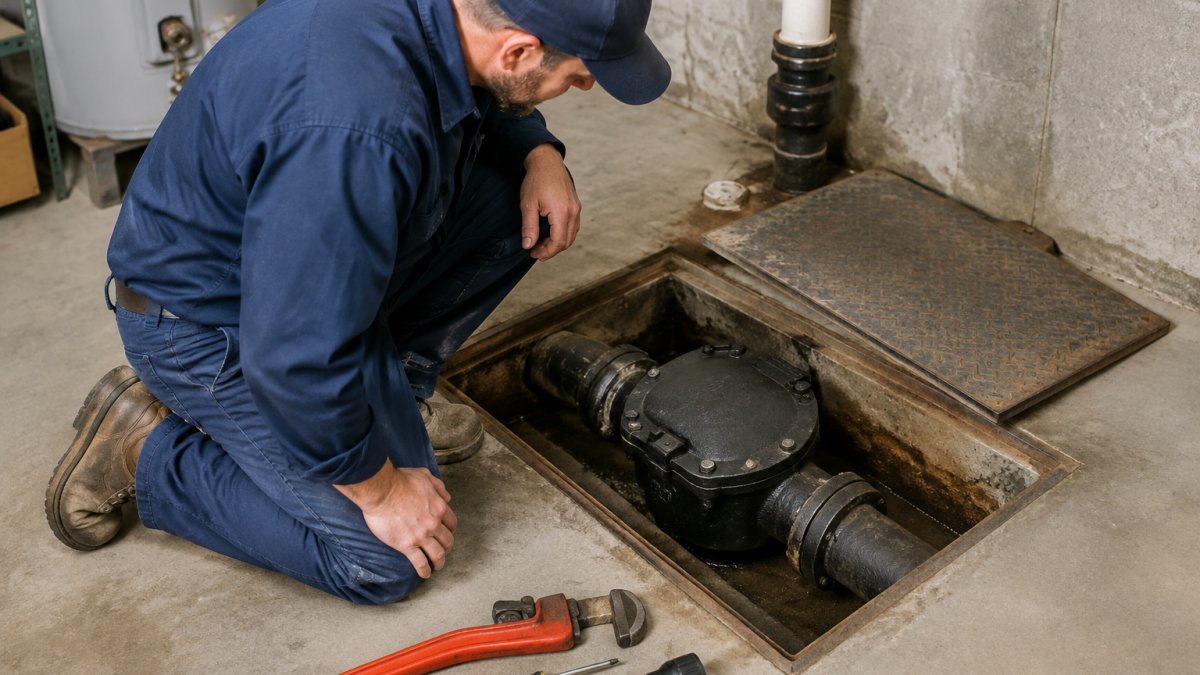
There are two common types. An inline valve is installed in the horizontal run of the lateral and uses a flap that swings shut when flow reverses. An open-gap or normally-open valve stays open under normal flow and closes only when the downstream line fills; it is often easier to retrofit because it can be installed in a shorter section of pipe.
Selection matters as much as installation. Look for a valve body rated for the pipe diameter and material in your home, and confirm the flap is serviceable without cutting the pipe.
Because installing a valve requires working in your basement floor and sewer line, hire a licensed plumber and check local permit rules first.
Once installed, a backwater valve needs regular care:
- Inspect the valve and access cover every few months.
- Clean out any debris that collects in the valve body.
- Confirm the flap moves freely and closes fully.
- Schedule a professional check at least once a year.
- After any major storm or backup event, open the access cover and check for grit or paper caught in the flap.
A valve only works when it is clean and moving. A stuck flap can trap sewage in the basement instead of protecting it.
Watch out: a backwater valve installed on the wrong line, for example, downstream of a floor drain that also serves a laundry, can protect some fixtures while leaving others exposed.
Step 3: Use a Floor Drain Plug to Prevent Sewer Backup
Basement floor drains are the most common entry point for backed-up sewage. A floor drain plug or drain cap seals the opening so sewage cannot rise through it. Some plugs are simple rubber stoppers, while others are inflatable or screw-in devices.
- Choose a plug rated for sewage: standard rubber stoppers can be pushed out by pressure.
- Keep it in place when not in use: remove the plug only when you need the drain for water.
- Check the seal regularly: look for cracks, shrinkage or buildup around the edge.
- Never seal a drain you need for a water heater or sump pump: confirm which drains serve these systems first.
If your floor drain connects to the same line as a bathroom or laundry, sealing it protects those fixtures too. Make sure household members know where the plug is and how to use it.
Step 4: How to Prevent Sewer Backups in Basement Spaces
Basements take the first hit when a sewer backs up because they sit lowest in the home. Protecting that space takes a few layers of defense working together. Start with a backwater valve, then seal the floor drains, then keep the sump pump running.
A sump pump handles groundwater that enters the basement. If the pump fails during a storm, that water can add to backup pressure. Test your pump by pouring water into the pit, and make sure the discharge line sends water away from the foundation.
You should also check the areas where pipes enter the basement. Seal gaps around pipe penetrations, and look for staining or moisture on the walls and floor. Small leaks are early warning signs that water is getting in.
For a full review of your basement’s water protection, a licensed plumber can check your setup.
Step 5: How to Prevent Sewage Backup During Flood Events
Floods push more water into the sewer system than the pipes were built to carry. Preparing before a storm reduces the chance of sewage entering your home. Watch the forecast, and take action when heavy rain is expected.
- Stop using water during a storm: showers, laundry and dishwashing add load to the system.
- Keep drains clear of leaves and debris: clean around outdoor cleanouts and storm grates.
- Check the backwater valve and floor drain plug: make sure both are working before the rain starts.
- Confirm the sump pump runs: test it and keep the backup power ready.
- Move valuables off the basement floor: store items on shelves or in plastic bins.
If sewage does back up during a flood, avoid direct contact with the water. Shut off electricity to the affected area if water is near outlets or appliances. Call a licensed plumber and your insurance company as soon as it is safe to do so.
Scheduling Seasonal Inspections and When to Call a Professional
A yearly inspection catches small problems before they turn into backups. Schedule a check each spring and fall, and add one before the heavy rain season if you live in a low-lying area. A plumber can run a camera through the lateral, look for root intrusion, and test the backwater valve.
Call a professional right away if you notice:
- Sewage in the basement or any drain
- Several fixtures draining slowly at the same time
- Gurgling sounds from toilets or drains
- A sewer odor inside or outside the home
- Recurring backups that a drain snake does not fix
Do not try to clear a backup on your own if sewage is already coming up. Trained technicians have the right tools and protective equipment.
Booking Your Sewer Inspection With The Pleasant Plumber Inc.
A sewer inspection can show what is happening inside your lateral, so you can fix the real problem instead of guessing. The Pleasant Plumber Inc. is a family-owned and operated plumbing company serving the Minneapolis-Saint Paul area with licensed local plumbers.
Pricing depends on the work your home needs, so check our website for current rates or request a quote before we arrive.
Frequently Asked Questions
Is there a way to prevent sewer backup?
Yes. Most sewer backups can be reduced with a few habits and devices. Keep grease, wipes, diapers and paper products out of toilets and sinks, since they clog lines and catch other debris. Install a backwater prevention valve if your home has basement drains below the street-level sewer, and consider a floor drain plug when you are away or during heavy rain. Scheduling a camera inspection every few years also reveals root intrusion or sagging pipes before they cause a backup.
Can a backwater valve prevent a sewer backup?
A backwater valve stops sewage from flowing back into your home through floor drains and fixtures when the public sewer is overloaded. It only allows water to flow one way, out of the house. Because the valve must stay open for your household drainage to work, it needs periodic inspection and cleaning. Check it at least once a year, clear debris from the flap, and confirm it closes fully. A licensed plumber can install and service the valve.
Can a floor drain plug prevent a sewer backup?
A floor drain plug can block sewage from rising through a basement floor drain during a backup, but only if it is in place and sealed before the problem starts. Use a plug designed for your drain size, and remember that it also stops your own drain from working, so avoid running water into that drain while it is plugged. A plug works best combined with a backwater valve, which handles drains you still need to use.
How can you prevent a sewer backup in a basement?
Start by identifying which basement fixtures sit below the level of the street sewer, since those are most at risk. Install a backwater valve on the main drain line, seal or plug floor drains you rarely use, and keep sump and laundry discharge lines separate where possible. Clear hair and soap buildup from basement sinks and showers regularly. If your home has recurring basement backups, a licensed plumber can evaluate whether the problem is in your home lateral or the public main.
